Meet the speakers

Meet the speakers

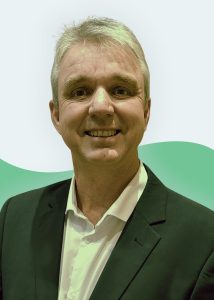
James Herbert

Mediclinic Corporate Office

James Herbert began his career in Clinical Engineering, where he provided hospital technical support, conducted audits, trained technicians, and managed medical equipment maintenance and life cycle costs.

In 2009 he transitioned to Procurement and Supply Chain, and today serves as Group Procurement Executive at Mediclinic International, overseeing USD 1.7Bn in spend across Southern Africa, the Middle East, and Switzerland, with a focus on synergies and savings. 

He holds a National Higher Diploma in Electrical Engineering (1993), a Management Diploma (1999), and a Master's in Procurement, Logistics, and Supply Chain Management from Salford University (2020). With three decades in healthcare, James combines strong technical expertise with strategic leadership, negotiation skills, and intrapreneurship, having introduced numerous initiatives and presented at international healthcare events. 

Helen Potgieter

President of the National Council, CEASA

Helen Potgieter is a Clinical Engineer who graduated from the Tshwane University of Technology (TUT) in 1995. A member of CEASA for 26 years, she currently serves as elected President of the National Council.

She is currently a doctoral candidate researching strategies to optimise clinical engineering for sustainable healthcare operations in South Africa. Helen spent 10 years in the private hospital sector, concluding her corporate career as Regional Technical Manager at Netcare in 2007.

She is co-owner and director of REAF Consulting, a health technology consultancy specialising in hospital development, clinical engineering, health planning, verification audits, and strategic advisory services. 

She lectured part-time at UNISA for over 11 years and serves as external moderator for Clinical Engineering at TUT. 

Maria van Zyl

North West University

Dr Maria van Zyl is an industrial engineer and senior lecturer in the school of Industrial Engineering at North-West University, South Africa, and holds a PhD in Industrial Engineering from the University of Twente in the Netherlands.

She is a recognised authority in healthcare systems engineering, advancing the application of industrial engineering, operations research, and data-driven methods to improve performance in complex, resource-constrained health systems.
Her research addresses hospital delays, patient flow, and the sustainable adoption of lean practices, while foregrounding the wellbeing of healthcare professionals. She is internationally known for contributions to lean healthcare and for pioneering the use of machine learning to identify drivers of burnout and emotional exhaustion among nursing staff in South Africa. Her work is widely published and presented at leading international forums.
Her focus is on turning strong research into practical insights that shape policy and lead to real improvements in healthcare practice.

Peta De Jager

South African Institute of Architects

Dr Peta de Jager is Chief Executive Officer of the South African Institute of Architects and a registered Professional Architect with over 27 years’ experience spanning practice, research, and institutional leadership. She recently completed her PhD at the University of the Witwatersrand, examining transformation within the architecture profession.

Prior to her current role, Peta spent eighteen years at the Council for Scientific and Industrial Research (CSIR), where she progressed from researcher to Impact Area Manager. Her work focused on evidence-informed, context-appropriate approaches to healthcare and public infrastructure, including TB and infection prevention facilities, post-occupancy evaluation, and sustainable human settlements. She played a key role in developing national healthcare infrastructure guidelines and led multidisciplinary initiatives supporting the National Department of Health.

A Past President of SAFHE, Peta brings deep experience in healthcare facility planning, performance modelling, and policy alignment, with a sustained commitment to resilient, climate-responsive, and socially responsive infrastructure systems.